Thursday, April 4, 2019

‘A Woman’s Voice: Stories of Strong Women in History’


By Ramona Shelton
Motlow Buzz Managing Editor

        Beginning in 1987, March was officially recognized in the United States as Women’s History Month, but the story does not start there. In 1978, a group of teachers in California proclaimed the first Women’s History Week because they felt that International Women’s Day, a celebration begun in 1911, was not enough. This group focused on the struggle for women to receive the right to vote, a fight spearheaded in the late 19th and early 20th century by equality activists such as Susan B. Anthony, Elizabeth Cady Stanton, and Alice Paul. The success of these women opened the door to the passage of the 19th Amendment to the U.S. Constitution, which finally gave suffrage to the women of this great nation.

        Thanks to the success of the Sonoma teachers, the Women’s Action Alliance and the Smithsonian Institution began calling in 1980 for not just a week but a full month of celebrations of the contributions women have made in American and World History. It took them seven full years of fighting but beginning with President Ronald Reagan, every U.S. President has set off Women’s History Month with an official proclamation.

        In 2011, the Obama Administration issued “Women in America: Indicators of Social and Economic Well-Being,” an official study showing not only the current status of women in the United States but also how it had changed throughout the decades. The last time such an official study was done was during the Kennedy Administration’s 1963 Commission on the Status of Women, a domestic offshoot of the United Nations committee of the same name. The question begs to be asked… over the course of the 48 years between these two studies, how much had actually changed for women in this country? The simple answer is nowhere near as much as it should have! It is all too easy to think that women had little impact on history until 2011 or 1987 or even 1911, but the real truth is that women have always been the backbone of history and the stories of these women going all the way back to ancient times deserve to be told.

Telling stories about remarkable women are (from left) Jamiyah Richardson, Joan Holland, James Wilkinson, Debbie Stockdale, Amy Campbell, Ramona Shelton, Jena Clew, Jessica Barber, Kamron Holliman, Ashley Holt, and Stacy Dowd. (Photos by Charles Whiting)

        With this in mind, the Motlow Smyrna History Club sponsored “A Woman’s Voice: Stories of Strong Women in History,” a spoken word event, on March 27. Students, faculty and staff were invited to tell the stories of women, ancient and modern, American or international, famous or not, who had an impact on history. Speakers were encouraged to wear purple or green, the official colors of Women’s History Month. Purple was chosen because historically it was the color of royalty, and green was chosen by the early leaders of the Women’s Suffrage Movement.

        Over a dozen speakers presented details on women whose stories they believed deserved to be told. Stacy Dowd, biology professor, spoke on Elizabeth Blackwell, the first female doctor in American History. Dr. Blackwell managed to get into medical school at a time when women were seen as too weak for such a thing. Her acceptance was seen as a joke, but she refused to back down. In addition to not only getting her degree, she was a pioneer in this country in simple things like handwashing to lessen the spread of infection.

Stacy Dowd

Jena Clew
Jasper Emerton
        World History students Jasper Emerton and Jena Clew spoke on two powerful women from Egyptian History, Cleopatra and Hatshepsut. Both of these women became Pharaohs of Egypt, a position traditionally held only by men. As successful rulers, both of these women managed to increase Egypt’s wealth and power though both had sad endings. Hatshepsut died from bone cancer likely caused by the chemicals in ancient cosmetics, while Cleopatra committed suicide rather than being captured by the Roman military, to whom she had just lost a war.

Amy Campbell

        Some of our subjects still have an impact to this very day. Amy Campbell presented the story of Elizabeth Jennings Freeman, a woman who refused to give up her seat on a trolley car. In history classes, we often discuss how Rosa Parks did something similar in the 1950s, but Mrs. Jennings’ actions happened decades earlier. Like Parks, Jennings refused to back down and took her discrimination case to the courts. 

Jamiyah Richardson


        Jamiyah Richardson spoke on Madam C.J. Walker, the first African-American female self-made millionaire. Madam Walker started a home business selling hair products for African-American women and became so successful that she was able to continuously expand her business.

Joan Holland
James Wilkinson
        The subjects of James Wilkinson’s and Joan Holland’s tales were women who began a fight for recognition and equality that is still ongoing. James thought about telling his grandmother’s story, a woman who was a part of the Women’s Corps in World War I, but since he thought she might not have impacted enough people in history, he switched to Helen Keller. Helen Keller was born with sight and hearing but lost those senses at 18 months when she suffered from a bout of Scarlet Fever. Not knowing what to do with a child with disabilities, Keller’s family essentially allowed her to turn into a holy terror. As she got older, they brought in Anne Sullivan, a teacher connected to Alexander Graham Bell, and she got Keller on a path to lifelong education. Keller graduated from Radcliffe College and published multiple articles and books. Nelly Bly, the subject of Joan Holland’s speech, was the pen name of journalist Elizabeth Cochran. Bly is best known for her newspaper expose’ of the treatment of women in asylums. It was common for women to be committed to insane asylums for the slimmest of diagnoses and once inside their doors, they were not likely to be heard from again. Bly managed to get herself committed so she could report firsthand on the deplorable conditions. Getting in was easy but getting out was not. She had to get her editors to fight for her release because, as an inmate, she was unable to “prove” she was sane.

        Ashley Holt and Jessica Barber told the stories of two women who set out to encourage others in very different ways. Ashley’s subject was Jane Addams, a woman who came from a well-to-do family in Chicago near the turn
Ashley Holt
of the 20th century yet realized that her city was filled with people who did not have the same advantages as she did. Jane Addams took money that she inherited from her father and used it to start Hull House, a place for women and children to not only find shelter and food but also support and education. Without Jane Addams, so many would have died on the streets, and the world recognized her work with a Nobel Peace Prize. As Jessica Barber pointed out, helping women break the mold they were forced into by
Jessica Barber
male-dominated fashion gave women a sense of control in their lives. This was the life’s work of Coco Chanel. In the time after the World Wars, Chanel realized that women’s fashion was dictated by men and was quite often used to force women to create personas that “kept them in their places.” Taking her cue from men’s fashion, Chanel first morphed menswear into female forward clothing and then she created something that women to this very day still embrace- the “Little Black Dress.” Thanks to Coco Chanel, women had the opportunity to dress for themselves rather than to impress the men of the world.

        The idea of the strong woman who has an impact on history does not mean that she had to be a famous woman. Two of our speakers told the stories of local women who have inspired others. Nursing student Kamron Holliman
Kamron Holliman
spoke about Nashville area Dr. Melan Smith-Francis. Dr. Smith-Francis does not sit in an office and wait for patients to come to her. Rather she goes out into the community and brings care to those in need. Her hands-on and caring approach ensures that those most at risk do not fall through the cracks. Dr. Smith-Francis has inspired Kamron to become a nurse himself so he can follow in her footsteps and help others. Tierney Finnie took a different tactic with her subject, a teacher who is no longer
Tierney Finnie
with us. Rather than tell the story of Lisa, a middle school teacher who inspired Tierney herself and countless other students, Tierney honored Lisa’s memory with a personally written poem directed at Lisa herself. It is easy to imagine this amazing woman smiling down from above, knowing that in her lifetime, she inspired so many students like Tierney to follow in her footsteps and help others.

        The event was bookended by its organizers, Professors Ramona Shelton and Debra Stockdale who both spoke on impactful First
Ramona Shelton
Ladies of the United States. Professor Shelton told the story of Martha Washington, a woman most often dismissed as her far more famous husband’s frumpy, dumpy little wife. In reality, Martha Washington was as much of a fighter as her husband. She helped him with many of his successes during the American Revolution and in the establishment of the United States. Martha Washington definitely deserves to be remembered as one of our greatest Founding Mothers. Professor Stockdale closed the show with the story of Barbara Bush, wife to one President of the United States and mother to another. Despite satirists making fun of her for her looks- saying she looked more like Bush 41’s mother than his
Debra Stockdale
wife- and her white hair -- which was caused by the shock of losing her three year old daughter to leukemia -- Mrs. Bush never backed down. Her platform as First Lady was literacy education.

        The History Club would like to thank everyone who attended or helped with the event. This was one of the first such Women’s History Month events held in Smyrna and thanks to campus-wide support, it was a huge success.

Student and Community Reading Night to Occur in Moore County on April 11


A Trip to the Cheekwood Mansion and Museum


By Ramona Shelton
Motlow Buzz Contributing Writer


        Nestled within Belle Meade, an area of Nashville known for its old mansions and very expensive new builds made to look old, is the Cheekwood Mansion and Museum. This large estate dating from the early part of the 20th century was the venue for the latest MSCC Smyrna History Club trip.

        At the time we went, Cheekwood was holding its “Cheekwood in Bloom” festival. To get to the mansion itself, visitors have to walk through all the site’s grounds and lush does not come near to describing the landscaping. The grounds looked like someone had painted them in strokes of orange, yellow and cream thanks to the thousands of tulips currently blooming. On the day that we went, there were several families there with their young children, using the floral explosion as backdrops for some really cute kid pics.

Cheekwood is known for terraced patios (Photo by Ramona Shelton)

        Just outside of the house itself was a series of terraced patios. The bottom patio overlooked the small pond on the property but the higher up the yard we went, the more beautiful things got. After climbing a set of steps marked with the ominous sign “Historic Steps, Traverse Carefully at Your Own Risk” (which this author is proud to say that she successfully traversed without falling and breaking anything!), we arrived at the second patio level. This one had a small reflecting pool bracketed by stone statuary and an even more beautiful view of the grounds. But the top level, with its covered patio just off the back of the house, offered breathtaking vistas of not just the Cheekwood grounds but also different sections of Nashville. At the time when the mansion was built, there would not have been a skyline, so the family’s views would have been farmlands for miles.

History Professor Ramona Shelton (center) with members of the Motlow Smyrna History Club

        As we walked into the mansion’s entryway, we were greeted by a docent who told us the story of the family behind the mansion and grounds. Nashville’s Cheek family made the first chunk of their wealth in the coffee industry. In the 1920s, their Cheek’s Special Blend was sold nationwide and garnered the attention of General Mills, a company best known for their cold cereals. GM wanted to branch out into other groceries and saw Cheek’s Special Blend as a good jumping off point. In 1928, GM paid the Cheek family $40 million for proprietary rights to the coffee formula and the farms where the coffee beans came from. Interestingly, this sale occurred just before the Great Depression hit so the family’s wealth was solidified. But don’t worry about GM spending so much money at such a time. This coffee is still available for purchase to this very day under the name General Mills gave it -- Maxwell House.

        The ground level of the mansion includes the entryway where the docent told us about the family and its coffee, as well as the family parlor which opens up onto the top-level patio mentioned before. While this room is still set up fairly similar to how it looked when the Cheek family lived there, it is different than most museums. Since the Cheek family often had guests over and played games in the room, there are several tables still set up that people can still sit down at to play checkers and other games.

        While the upper two floors are set aside as art galleries, there are still several rooms that are much like the Cheek family left them. The second floor included a loggia, a formal sitting room with a grand piano, as well as a formal dining room and ladies’ parlor. The top floor included Mr. Cheek’s study which had the family crest in a stained glass window. Both of these floors currently had art exhibits including several paintings on loan as well as art pieces done by Belmont University students inspired by pieces from the Cheekwood collection. The top floor also had a couple of interesting displays. One was a series of photos and sculptures by a local artist who takes pieces of serving crystal and breaks them into smaller shards for display. The other, and slightly more disturbing, display came from another artist who works with plexiglass furniture. The centerpiece of the display was a Lucite baby bed with the left side sinking into the ground, leaving the cradle at a 45-degree angle. According to the description, the piece was made to show the juxtaposition of birth and death.

An example of fine art on display at Cheekwood Mansion (Photo by Ramona Shelton)

        Sadly, at the time that we went, the items connected the Cheekwood collection I most wanted to see were not on display. The Cheekwood Museum is one of the few museums to have displayed Fabrege Easter Eggs from the Romanov Dynasty. As a part of the Matilda Geddings Gray Foundation, the Cheekwood has served as home for three of these priceless pieces of art history.

        To learn more about Cheekwood, visit http://www.Cheekwood.org.

Middle Tennessee Bargain Shopping Deals

By David Heath
Motlow Buzz Contributing Writer 


     Are you looking to save that hard-earned cash in Murfreesboro? Shopping has become quite expensive. Luckily, I know where to find great deals to help keep more money in your wallet!

     Finding a great deal in Murfreesboro can be quite challenging in today’s economy, mostly because it is one of the fastest growing cities in all of America. However, that also means there are plenty of new shops to find some amazing deals, especially during the summer and spring seasons when winter clothing and last year's summer clothes are marked down significantly.

     I have lived in Murfreesboro for 20 years. During that time, I’ve had the opportunity to discover a host of discount shops and thrift stores. These are a few of my favorites.

Bargain Hunt:

     There are currently two Bargain Hunt stores in Murfreesboro. Each sells different items, so I’d recommend visiting both stores to find the deals you’re most interested in! Bargain Hunt sells a wide range of goods, including food, clothes, CD’s, and even electronic equipment for a great price. Bargain Hunt is also an exceptional place to find gaming equipment. I have found PS4 and Xbox One headsets in Bargain hunt for extremely low prices with decent to good quality.

     When my gaming equipment gives out over time, I can visit Bargain Hunt for a cheap and reliable replacement until the next pay day. One Bargain Hunt is located at 1960 Old Fort Parkway; it has become more popular in recent years. The other location is at 1114 Mercury Blvd. For more information about Bargain Hunt, visit their website at www.bargainhunt.com.


Dirt Cheap:

     Dirt Cheap offers a variety of goods like Bargain Hunt. However, it focuses more on clothes and non-essential foods and snacks. The store offers a limited supply of electronics at a much lower price than at Bargain Hunt including speakers, electric fans, and grooming equipment that require electric power.


     Dirt Cheap also offers a much larger selection of all types of clothing. Whenever I am in need of a new pair of sweatpants, or a nice and casual-appearing shirt, Dirt Cheap is always my go-to for comfortable and inexpensive products.

     Dirt Cheap typically will not carry many name-brand clothing items, and mostly centers itself around affordable and reliable products. However, if you enjoy Harley Davidson clothing, Dirt Cheap typically has a variety of quality Harley Davidson shirts for under $10. These would cost anywhere from $35-$40 in an official Harley Davidson store.

     There is currently only one Dirt Cheap location in Murfreesboro. It is located at 902 Mercury Blvd. If you live or work in Smyrna, you can visit the Dirt Cheap location at 565 S. Lowry St.

     For more information, visit their website at ilovedirtcheap.com.


Fred’s:

     Fred’s Discount Store is better known than Dirt Cheap or Bargain Hunt. It offers more mainstream products that may be advertised on television or sold in other popular retail shops. Out of all three discounted stores, Fred’s Discount Store has by far the largest selection of inventory. The major upside to Fred’s is that the store offers a large variety of off brand-clothing, snacks and electronics at a very low price.

     Fred’s also sells name-brand home essentials at an extremely low price, including puppy pads, diapers, dog food, and even lawnmowers. I recently became the owner of a pet rabbit, and finding inexpensive bedding, feed, and litter can be quite the challenge. I can vouch that Fred’s by far has the widest selection for animal needs, such as feed and litter for multiple animal types, collars and leashes, and even toys for your pets. It has become a personal favorite of mine. The store is located at 1664 Middle Tennessee Blvd.

     You can visit their website at fredsinc.com for more information.

Our Thrift Store:

     Our Thrift Store is an independently owned thrift store that provides special opportunities to disabled individuals. Although the selection here is limited more than the three other stores on this list, I believe this store is important because it is prideful about their passion to help those with special needs.

     Almost all of their employees have a form of disability, and 100 percent of the revenue goes into the GEAR foundation. This allows Our Thrift Store to hire new employees and expand in the future, and gives their employees an opportunity to move on to higher paying jobs.

     Our Thrift Store specializes in marked down “off” and “on” brand clothing, books and home appliances. There is also a small section of CD’s, games and home appliances such as vacuums and plungers, etc.

     The customer service within Our Thrift Store is nothing short of exceptional each and every time. The atmosphere within the store is unique, and unlike the atmosphere in a chain market or large retailer-every employee enjoys building relationships with their customers. This provides a community like place to shop and congregate.

     Even though this store has a much smaller market to select from. I have found shirts made from Polo Ralph Lauren, Michael Kors, and even purses from Coco Chanel all under $20 each. I do visit this store much less often than the others on this list, simply because the store is located in Franklin, Tennessee. I strongly recommend this store if you have time to make the trip and spend quality time searching for the deals the store is sure to have.

     For more information on Our Thrift Store, their mission as a company, and the Gear Foundation, visit their website at http://www.ourthriftstore.org/.


     In today’s economy, finding deals on the brands you love, or even finding deals for needed items such as home appliances is becoming more important every year. Middle Tennessee has a large selection of discounted and thrift stores to choose from, and choosing the best and most affordable stores can become challenging with such a large selection. I hope with this article, narrowing down which stores to visit on your days off to shop has become a much easier process!

How to Use Social Media to Benefit Your Business

By Kenya Anderson
Motlow Buzz Contributing Writer


With the social media now a part of our daily lives, it is important to know how to use it to boost your business and brand.
A few months ago, I was hired as a social media manager for a hair stylist. Before I started, I naively thought it would be easy to do. Post a couple of pictures here and there, respond to a few comments, keep customers updated on what’s happening, but it is much more than that. It’s knowing when to post, what to post, and how to make sure you are posting the right information. In this article, I will provide you with some tips on building your business with social media.

Make a business page:
The first step you need to take is to make your business its own page. One mistake people make is that they only use their personal page to promote. This can be okay when you first are getting your feet wet, but if you plan on expanding, your business should have its own page. Use your business page to share what you do, add hours, post pictures, interact and promote! Future customers can ask questions, and current ones can leave reviews.  Not only that, but it’s much more professional. Keep your business a business.
For help on how to set up a business page, you can visit www.fitsmallbusiness.com or www.socialmediaexaminer.com.

Using Hashtags:
Using hashtags on your posts is an important and easy way to reach more people. With social media, a hashtag might be all someone needs to find you. If you create one with your business name, which you certainly should, you can receive more exposure. If it is shared with someone and they repost the hashtags
Someone could find a post with the hashtag, search it, and find all your posts, showing them the goods and services you provide.
Not only should you use your own, but include hashtags related to your business. This will help people who are looking for a specific product or service find those who offer it. Hashtags should be both broad and specific. Include one with your city and surrounding cities, what it is you do, and what specific things you’ve done on that post. So, say you do nails in Murfreesboro. Your post should include something along the lines of #nailart #Murfreesboronailstylist #nailstylist #ombrenails.
For more information and examples on hashtags, you can visit https://blog.hootsuite.com/how-to-use-hashtags/.

Know your peak times:
Posting on social media can sometimes be a hit or miss. When you first start posting, you can use general peak times. After you start posting though, you will be able to see what time of day works best for you and your followers. 


To get started, www.Oberlo.com shares their research on the best peak times for each social media website. For Instagram, it’s 11 a.m. to 1 p.m., then 7 to 9 p.m. For Facebook, it’s 1 to 4 p.m. For Twitter, it’s 12 to 1 p.m.


You can visit the website to get see more details and charts at https://www.oberlo.com/blog/best-time-post-social-media.

Know how often to post:
It is very annoying when you’re trying to scroll through social media and see the same post again and again. Don’t be that business. Knowing what time to post doesn’t mean posting 1,000 times at once, nor does it mean only one post at that time. You should always posting stuff about your business to keep everyone informed, just do it in moderation. With over posting, you can be annoying and lose followers, but not posting enough can be bad as well. It’s not going to help you if someone goes to your page and doesn’t see anything recent. They will move on to someone who keeps people updated.
www.ClearPivot.com did a small experiment to see how often a post is shared and gave their recommendations on how often a day you should post. To see this information, you can visit https://www.clearpivot.com/blog/is-there-such-a-thing-as-over-posting-on-social-media.

Involve people you know:
When you first get your business up and running, you just might need people you know to help spread the word. Invite them to your business page. Customers can share what their experience was like on the page and share it on their pages. That by itself will have people coming to check out what you do, and possibly follow you.
People like to support their friend’s and families’ businesses. One way to do that is by referring other people to them. When they are sharing a business page, they are able to do that. People that they follow then go and check out the page and often follow them. With one of the pages I was managing, a few shares from her friends and family helped her gain about five followers in a day.

Make it relevant, but interesting:
When making a post, offer information about your business, but don’t just sell to people. You might want to share an article or two every once in a while about why something you do is so beneficial or what’s new in your industry. Share more about yourself, how you started, and why you do what you do.

Customer interaction:
With any business, customer interaction is key! Use social media to build on that. When people are looking for someone to do something, and they see that the owner or boss responds to people, it will make them feel better.  Answer questions in a timely matter, invite them to share their experiences or suggestions, and make them feel welcome and not just like a source of income. This can help build credibility with people.
Make your business like a family. Introduce your employees and tell visitors about their accomplishments in the field. Make customers feel like they matter by posting things like voting polls, surveys, and giveaways.
For more tips on customer interaction, visit https://freshsparks.com/using-social-media-for-customer-service/.

Paid Ads:
Depending on how much you are willing to spend for marketing, you might be interested in paying for ads on social media. This, of course, will reach more people than just word of mouth. Choose the site (Facebook, Instagram, Twitter, YouTube, etc.) that will best reach your target audience.  But just because people see an ad, doesn’t mean they will click on it. For more pros and cons of this, visit www.socialmediatoday.com for a list of potential places to advertise.


Stay tuned for more of my insights and experience, and don’t forget to follow me on Twitter @KaysMarketing.

Concrete: Beyond The Foundation

By Sterling Stout
Motlow Buzz Contributing Writer

     We walk and drive on concrete every day, but most people don’t notice how concrete impacts other aspects of our lives. Concrete is diverse in the way you can mix, treat and apply it. In this article, I will inform you of lesser appreciated or lesser acknowledged ways that concrete has changed the lives of many. Whether it be through entertainment, safety or expression. 

     There are the basic uses for concrete that include sidewalks, building foundation, and general construction. We’ve all probably seen some form of concrete, and we could all agree: it’s not too exiting or interesting. It just seems very boring and bland. I mean, it hasn’t really been made to be something flashy or overly intriguing.

     However, if you take a moment to look at concrete through a wider lens, you might just be impressed with the diversity of ways it can be implemented beyond just a foundation. I’ve experienced concrete in an array of different ways throughout my life. I’ve visited cities and viewed the construction of anti-homeless, concrete spikes. I’m an aspiring artist and have experimented with concrete as an art medium. I have been to many concrete skate parks, local and widely known. I have developed a new understanding and appreciation of concrete for what it is and what can be done with it. I’ve seen how it can change lives, and I hope to provide you with a new view of how concrete has affected many.

Skate Parks: More than a Slab:

     Skateparks are an amazing example of how concrete can be used as a foundation and a main attraction. Not only are these places popular all around the world, but every single one of them is unique. Due to the massive sizes of the skateparks and all of the “ramps” and “bowls,” the molds are specifically made for the individual parks. The amount of time that it takes to create these parks is clearly trumped by the longstanding joy it provides to the people that gravitate to them. These parks have given a place for avid skateboarders to indulge in their hobby, away from the streets and to their fullest potential. This goes to show how concrete, while still in its most basic form, can be used to bring joy to a community.


     I have personally been to “Two Rivers Skatepark” in Nashville, Tennessee. In a bustling city such as Nashville, it’s great to see that there is a concrete oasis for BMXers, roller bladders, and skate boarders alike. The people there love to enjoy their passions of skate boarding while also being off the streets in an exciting, unnatural skating environment. You can see images of the skate park and others at https://www.concretedisciples.com/skatepark-directory .


Concrete: Providing Safety to Many:

     If you have ever seen those little pyramid-looking things under an overpass, then you’ve witnessed another abstract use of concrete. In many large cities and walking trails, you will see the incorporation of concrete spikes incorporated in lesser-seen areas of the architecture. These usually are observed under bridges, on the edges of some park sidewalks, and on some concrete benches. These are to deter homeless people from sleeping or hanging around those areas as the spikes are very uncomfortable and almost impossible to maneuver around. This is a way that concrete is being used abstractly to keep the citizens safe from homeless people that might be lurking under a bridge or sleeping on a bench. You can see some of these at http://www.chinahush.com/2012/07/05/building-cement-cones-under-highway-bridge-to-drive-out-homeless/


Art: Conveying Feeling Through Concrete:

     One of my personal favorite uses for concrete, beyond the foundation, is art. So much can be done with concrete and one person to truly prove that is Henry Moore. He made many pieces of art throughout his life but made all of his concrete pieces between 1926 and 1934. He began to sculpt using concrete along side stone and wood. He took a liking to this new medium as it was very cheap at the time, and he was short on money. Not to mention, new buildings were being built, and he was hoping to get commissioned to do pieces that could be built as part of the structures. He very much enjoyed the different ways it could be shaped. It could be poured into a cast, molded when soft, and carved when solid. You can even add dyes into it to change its pigment, and incorporate it into or onto other items.


     Henry Moore’s largest concrete piece is “Reclining Figure.” It depicts a woman lying on a concrete slab on her right arm and her left leg upright. The overall flow to the piece gives a strong sense of stability and balance. When creating the sculpture, he would add pigments at random to the still-wet concrete and not mix them uniform. The sections of red, brown and black pigments gave the end result a slightly more “stone-like” appearance. He had given the sculpture an internal metal framework to give it more support, but it can not be seen in the finished piece. The sculpture currently resides at the Saint Louis Art Museum. You can see more at https://www.slam.org/blog/moores-reclining-figure-returns-to-the-galleries/


     These are just a few different ways in which concrete can be used besides in just construction. It can be used to keep skaters off the streets and in a fun environment. It can be used to keep the citizens of a city safe from the homeless population scattered about. It can be used in art to convey emotion, ideas, viewpoint and just be a general outlet for artistic passion. Honestly, it seems like today concrete just keeps becoming more advanced in the ways it’s manufactured, the ways it can be applied in construction, and even the ways it can be a part of our everyday lives. I am personally very exited to see what the future holds for concrete and what we have in store for it.


For The Love Of Percussion


By Alara Bishop
Motlow Buzz Contributing Writer

     Do you want to be a percussionist? Do want to learn but don’t know where to start?

     Well here are a few tips and tricks I found most helpful over the past years, and I hope they are helpful to you. Most of what you do in percussion (as far as sticks, mallets, and private lessons are concerned) is personal preference. I wrote this article to give new percussionists some information on what helped me and what they might need to do to get started.

My background:

     In sixth grade, I tried out for band and made it into the percussion section. My love of making noise blossomed after that. I marched percussion all through high school and played mallets for concert percussion. In high school, I had to learn how to play many different percussion instruments.

     Percussion became my main focus. I still participated in choir, but band was my major thought. I loved being able to play all the different instruments in class. Learning to play percussion was not easy. With over 200 different instruments to learn, I had a big challenge ahead of me. I eventually learned that playing mallets was an easy thing for me, so I turned most of my attention to it.

What is Percussion?:

     Percussion is so much more than beating on a drum. To be a percussionist, you have to learn how to play many different instruments from all over the world. A major subheading under the umbrella of percussion is mallets.


     I played just about everything while I was still in middle and high school. Percussion is not just snare drums, and it is not just mallets. Percussion is not one specific instrument. It is a combination of hundreds of instruments from mallets to tambourines to a guiro. Percussion encompasses instruments from many different countries and brings them all together to make very unique sounds.

Sticks and Mallets:

     Drum sticks are the most important piece in any percussionists arsenal. There are hundreds of different types of drums sticks produced.
   
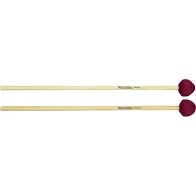
     I prefer to use Lalo Davilla’s innovative percussion concert drum sticks for any concert performances and Innovative Percussion Arena Series Marching Sticks Bret Kuhn Hickory marching percussion.


      Everyone is different, so pick the sticks that work best for you. I have large hands, so I prefer a larger, thicker stick. For each mallet instrument, you need a different pair of mallets.
     For Marimba and Vibraphone, I use Innovative Percussion Hard Vibe/Marimba Mallets.You can buy separate mallets for the vibraphone, but I tend to use the same ones because they are made for both.


     For Xylophone,I use Vic Firth Poly Xylophone Mallets.The Xylophone requires different mallets than Marimba and Vibraphone.
    

Using the incorrect type of mallets can damage the mallet and instruments, so pay close attention to what type of mallets go with the instrument you are using.

You can view different types of drum sticks at https://www.musicarts.com/drum-sticks-mallets?page=3&sort_by=topseller-descending

You can view different types of mallets at https://www.musicarts.com/search?q=mallets

Stick tape:

     Stick tape is not mandatory. I use stick tape just to preserve the drum stick a little longer. The most common tape used for stick tape is electrical tape. Electrical tape sticks better and is the perfect width to wrap around the stick. I usually change colors with each holiday, but again that’s not necessary and completely optional.

Training:

     No one will pick up percussion overnight. It takes many years and a lot of dedication to become a well-rounded percussionist. I became solely percussion-centered in sixth grade. That was nine years ago! I am still learning and growing as a percussionist myself. There are still many things I have to learn.

     I had several instructors while in high school. The most frequent instructor was Lalo Davilla’s wife, Julie Davilla.She was the percussion instructor my freshman, junior and senior years. She spends most of her time working with Drum Core International groups but does offer private lessons.

     There are many percussionists who offer private lessons and group lessons. Both of my middle school band directors were percussionists, so it made being in the percussion section even more fun. They took their love of percussion and put it into their teaching, and it made me realize how much I could really gain from it.

     It doesn’t matter if you are 10 or 50. It’s never too late to learn percussion. Several music stores such as Music & Arts, Music Stop, and Guitar Center offer paid lessons. The cost depends on the instructor, so it's different for every person and the level you are at when you start the lessons.

Practice:

     Practice makes perfect. You must practice! Just playing when you are in lessons or in a classroom will not help you improve at a steady rate. If you don’t practice you will spend much of your time trying to relearn and recall what you were taught during your lesson, and that will hurt you in the end.

Learn More:

     I hope some of this information was useful to you, and I look forward to writing more. Follow me on twitter @curioussoundunl and on Facebook @curioussoundunlimited. Visit my blog at www.curioussoundunlimited@gmail.com


Tuesday, April 2, 2019

These Driving Tips Could Save Your Life

Kristen Cooper
Motlow Buzz Contributing Writer

      Do you ever worry about being involved in a collision? There are endless challenges for those driving on the open road. Wrecks, weather and wildlife all affect traffic tremendously and can cause major havoc if thrown out of normal cadence. That is why it is incredibly important to be the best driver—and passenger—you can be.


Attention is Key:

     I have been an active driver for almost four years. Thankfully I’ve never been involved in a collision. I’ve always been more than careful and attentive while behind the wheel. My car and life are precious, so I act accordingly! Here in the United States, we are provided with the resources to develop and practice our driving skills in schools, so there is no excuse for such recklessness or ignorance. First and foremost, to drive is to have privilege. This privilege can risk not only your well-being but your peers’ well-being as well.

      Yearly, motor vehicle accidents take the lives of countless loved ones all over the United States. In an article titled “Avoiding Fender Benders Driving Expertly: Top 5 Defensive Driving Tips for New Drivers by Beginners Drivers Guide” it is blatantly stated that the number one “...cause of death for young people between the ages 15 and 20 is motor vehicle crashes.” This is baffling to me because it is avoidable. To see the entire article, visit https://kasroyal.com/avoiding-fender-benders-expertly-top-5-defensive-driving-tips/


Sobriety is Important:

     The first step to an efficient and safe trip is to confirm that the vehicles operator is completely sober. It is more than imperative to be completely aware. While intoxicated one’s senses are impaired greatly, and fuzzy focus can allow much room for error and in turn will cause turmoil quickly.

      At the young age of 15, most individuals are taken to their local DMV, tested and given their learners permit. A learner’s permit allows those in possession to drive accompanied with a licensed driver. It is important to use each ample opportunity to practice the ways and rules of the road. We learn best while we’re young, and there is no time like the present! Seize every opportunity to practice! To learn about impaired driving statistics, visit https://www.bactrack.com/blogs/expert-center/35040645-dui-statistics


Keep it Legal:

     The second step to becoming an acceptable driver is attaining your driver’s license! This assures by your state’s requirements that you are capable of commuting while others are as well. To explore driver’s license qualifications visit the following website: https://www.tn.gov/safety/driverservices/online.html


Don’t Lose Your Focus:

     Keep your attention on the road! This is where it belongs! If your center tends to drift to different objects and other people on the road, you should work hard on keeping your eyes on what is in front of you as well as your immediate surroundings. The best way to stay focused is to minimize as many distractions as possible.

     
     One way that most prefer to do this is by playing their favorite CD’s or playlists as they cruise. Since the listener is more than likely pleased with the music, he or she will devote most attention to it. This promotes focus and motivation. Adjusting the volume on your various electronic devices to silent is always a good idea. No one can deny our undying addictions and dedication to our hand-held distractions! For some additional tips on focusing, visit https://www.inc.com/lolly-daskal/10-smart-tips-to-prevent-distractions-and-sharpen-your-focus.html


Get Comfortable:

     Another great way to guarantee secure passage is to make yourself as comfortable driving as you safely and legally can. If an adjustment to reach the pedals is necessary, be sure to make it. Grab a seat cushion from your local Walmart or Auto Zone if the one in your driver’s seat is worn out! Find an appropriate length from the steering wheel. You are less likely to grow agitated driving while your body is relaxed. For more ways to relax while driving, visit https://www.wikihow.com/Relax-when-Driving


Watch Others:

     There are going to be many other cars sharing the marked pavement with you! Traffic is always an absolute nightmare, but it is inevitable. Though you will know your street signs, they may not. While you remember to use your signals and precaution, they may not. Though you practiced with your parents, they may not have shared the same circumstances! Therefore, you must watch your mirrors and surroundings constantly, intently and defensively. Act quickly and proactively. You must learn how other drivers regularly react to the vehicles around them.

      If you are capable, predict potential wrecks inwardly and take every measure possible to avoid them. Always have your hands at the ready position to make any short-notice/commanding adjustments to the wheel. For direction on how to pay more attention visit https://www.wikihow.com/Pay-Maximum-Attention-While-Driving

Be Accustomed with Your Car:

      Know your car’s size better than the back of your hand. Most fender benders and minor wrecks are all attributed to misjudged spacing. Find your mirrors and use them as often as you need them. 
Safe Travels:

      Random and uncontrollable occurrences happen daily. Though destiny is out of our hands, we should do what we can to prevent disaster. Keep in mind it is your responsibility to defend your life and the lives of others around you. Be considerate and smart, and remain attentive always. Each of these tips can and will improve your driving. Follow them and keep commuting with ease! To see Nashville Police driving tips, visit the following website: https://www.nashville.gov/Police-Department/Support-Services/Special-Operations/Traffic-Operations/Traffic-Safety.aspx